Monitoring & Ops

Capacity Planning — AI-assisted capacity intelligence

In Cloud Admin, Monitoring & Ops → Capacity Planning turns Prometheus signals and Kubernetes inventory into snapshots, forecasts, and fleet-wide roll-ups—so finance and platform teams agree before spend or outages force the conversation.

Product walkthrough

See it in Cloud Admin

Every frame below is a real Cloud Admin screen—paired with plain-language context so you know what you are looking at and why it matters operationally.

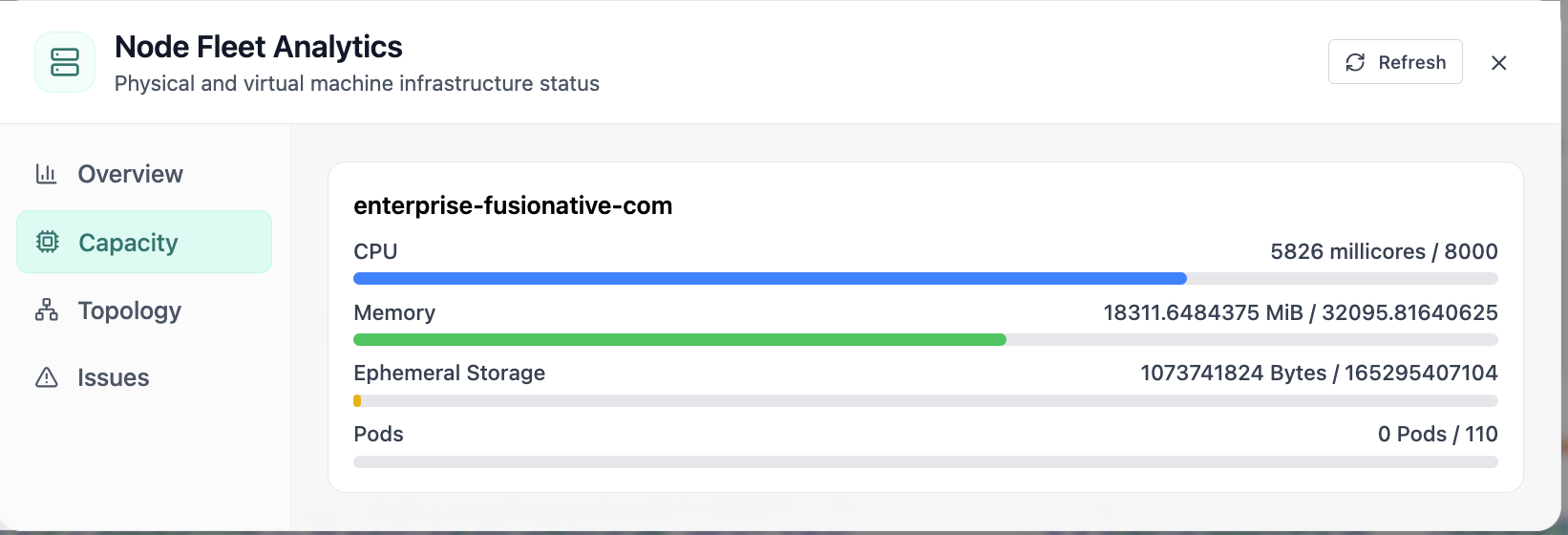
Node fleet capacity for CPU, memory, storage, and pods.
01 of 02 Cloud Admin

Node Capacity

Node fleet capacity for CPU, memory, storage, and pods. Real Cloud Admin UI for capacity planning—what operators see daily and what to do next.

  • Matches the live Cloud Admin layout your teams will use
  • Dense data stays readable at full size (click to zoom)
  • Fits into the broader FusioNative operational workflow

Click the screenshot to open full size, zoom, and pan.
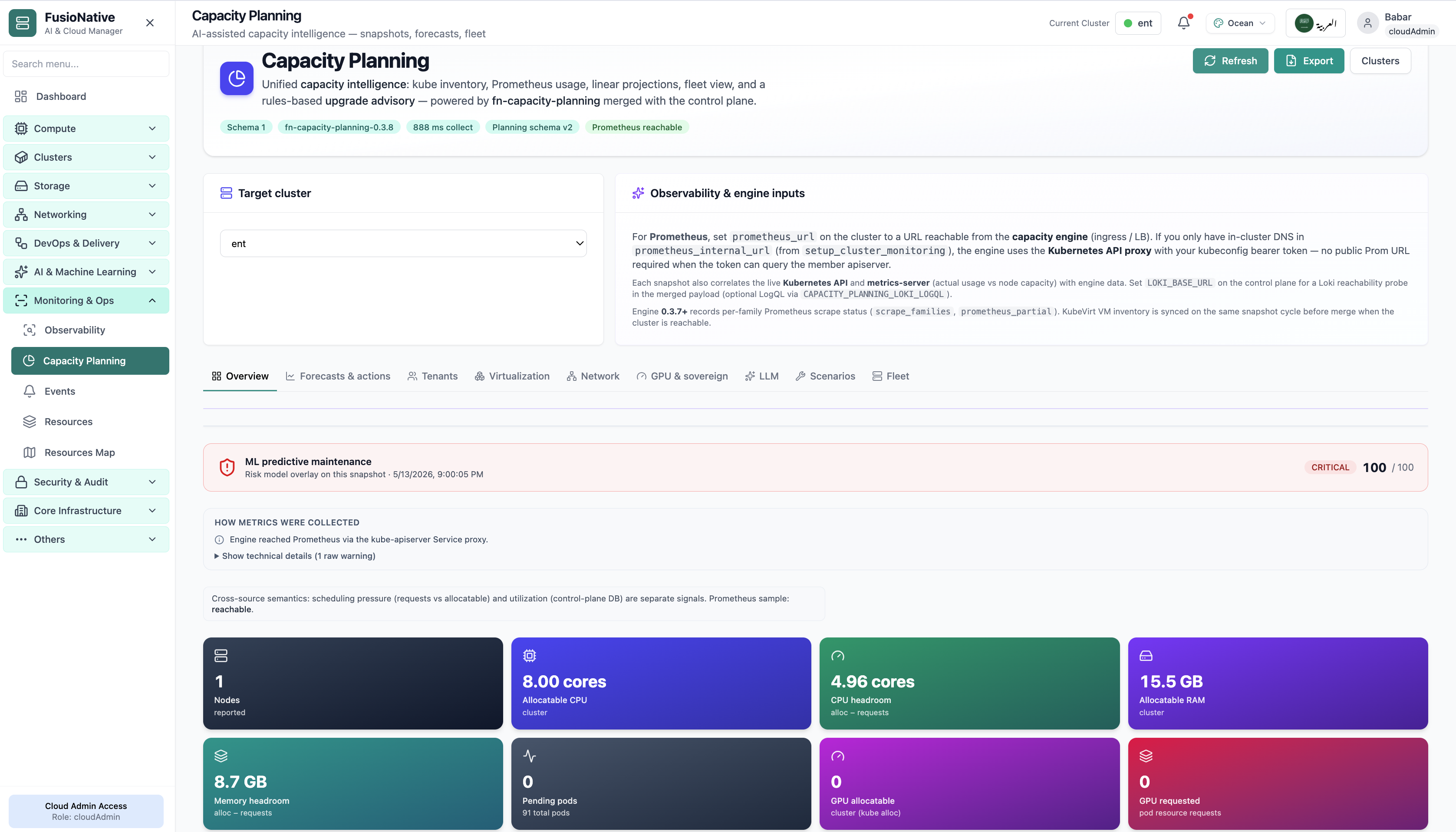
Capacity planning with headroom and predictive risk overlay.
02 of 02 Cloud Admin

Capacity Planning

Capacity planning with headroom and predictive risk overlay. Real Cloud Admin UI for capacity planning—what operators see daily and what to do next.

  • Matches the live Cloud Admin layout your teams will use
  • Dense data stays readable at full size (click to zoom)
  • Fits into the broader FusioNative operational workflow

Click the screenshot to open full size, zoom, and pan.

Planning narrative

Give Finance and Platform the same denominators

When capacity tiles, forecasts, and tenant overlays reference identical Prometheus series and Kubernetes objects, debates shift from “whose export is right” to “which scenario do we fund.”

Forecasts that cite inputs

Forecasts & actions stay grounded because collectors, schemas, and Prometheus health are visible—not hidden jobs in another portal.

Fleet without flattening nuance

Fleet and scenario tabs compare clusters without stripping virtualization, network, or LLM-specific overlays.

Tenant fairness

Dedicated tenant lenses translate raw cluster metrics into chargeback-ready narratives.