Core infrastructure

Infrastructure Management — sites, machines & provisioning workflows

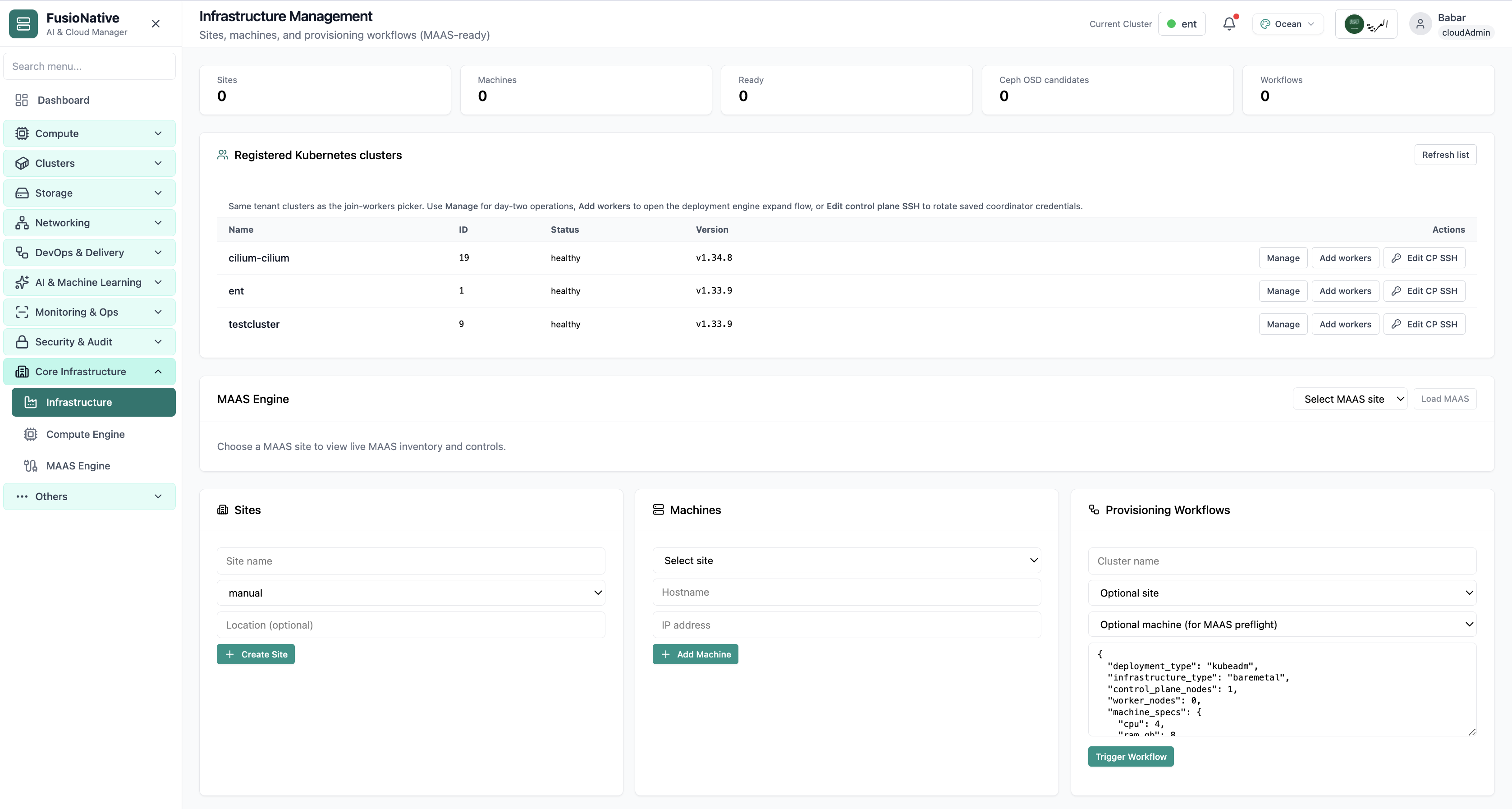
Under Core Infrastructure → Infrastructure, operators model physical reality before Kubernetes namespaces matter: logical sites, enrolled machines, optional Ceph OSD candidate counts, and JSON-driven provisioning workflows—MAAS-ready when your metal fabric is wired in.

Product walkthrough

See it in Cloud Admin

Every frame below is a real Cloud Admin screen—paired with plain-language context so you know what you are looking at and why it matters operationally.

Sites, machines, MAAS, and provisioning workflows.
01 of 01 Cloud Admin

Infrastructure Management

Sites, machines, MAAS, and provisioning workflows. Real Cloud Admin UI for infrastructure management—what operators see daily and what to do next.

  • Matches the live Cloud Admin layout your teams will use
  • Dense data stays readable at full size (click to zoom)
  • Fits into the broader FusioNative operational workflow

Click the screenshot to open full size, zoom, and pan.

Metal-to-cluster discipline

Ground Kubernetes in real hardware state

Infrastructure Management prevents “cluster sprawl on imaginary machines” by forcing sites, IPs, and workflow payloads to agree before automation promotes builds into production namespaces.

Intent before kubectl

JSON workflows capture CPU/RAM envelopes and topology counts—easy to diff when finance asks why nodes doubled.

Shared vocabulary

Sites map neatly into MAAS regions so networking and facilities teams talk about the same coordinates.

Storage foresight

OSD candidate counts surface early—operators stop guessing whether Ceph can absorb the next tenant burst.